Abcd Ref Dotted Arrows: A Unique Tool for Learning the Print Alphabet
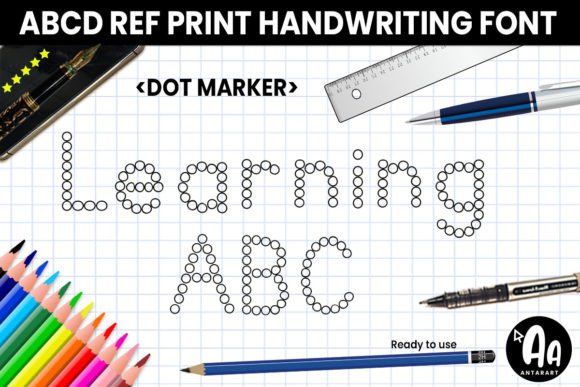
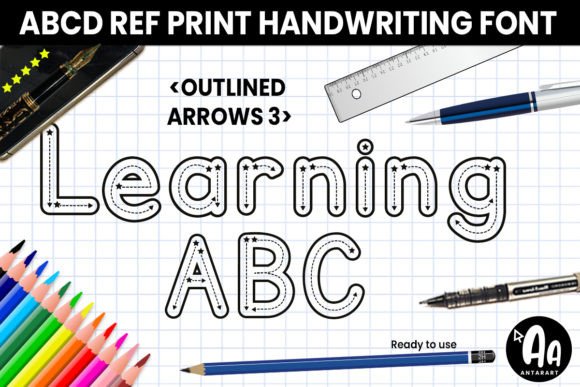
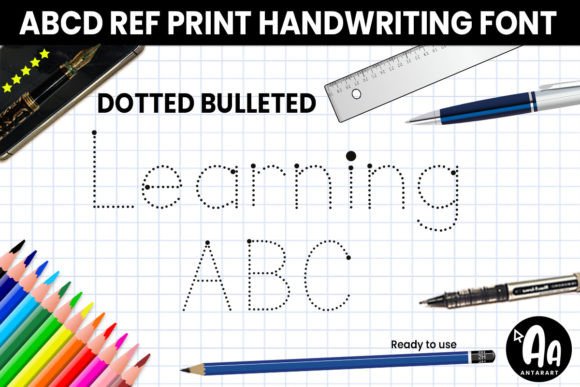
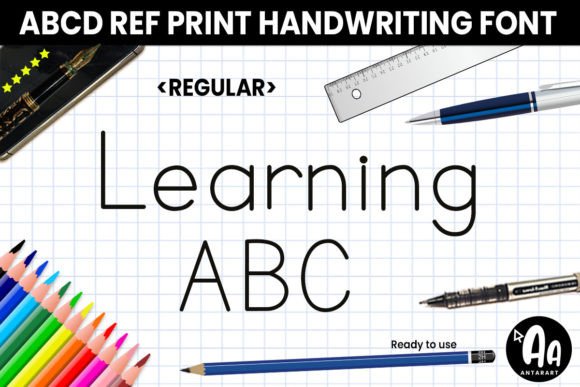
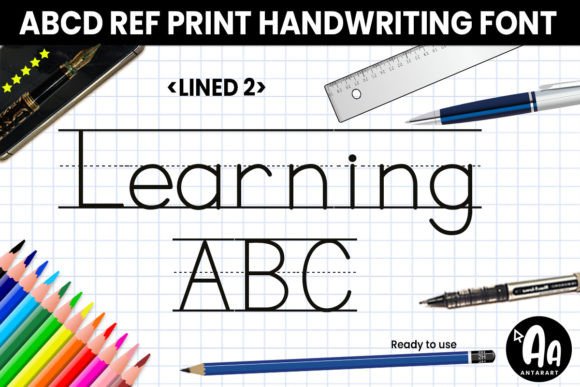
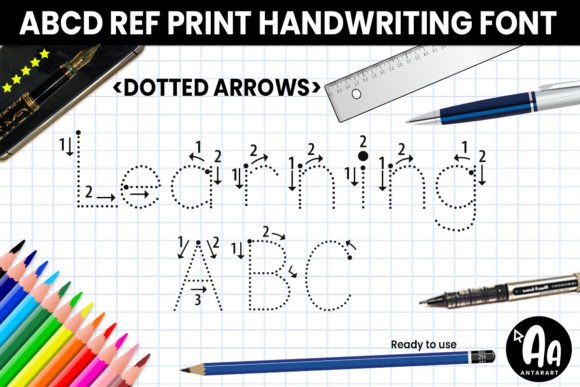
The Abcd Ref Dotted Arrows font family is a specialized typeface designed to support handwriting instruction, particularly for children learning the print alphabet. This font follows the principles of the D’Nealian Method, which is widely used in U.S. schools to teach cursive and print writing. However, instead of focusing on cursive, Abcd Ref Dotted Arrows adapts this method into a dotted format that emphasizes the correct formation of each letter in print style. The font's unique visual elements—such as arrows and dotted strokes—serve as guides to help learners trace and understand the directionality and structure of letters.
What Makes Abcd Ref Dotted Arrows Stand Out?
One of the key features that distinguishes Abcd Ref Dotted Arrows from other educational fonts is its focus on guided practice. Each character includes dotted lines and directional arrows that indicate where to start and how to form the letter correctly. This makes it especially effective for beginners who are just developing fine motor skills and need clear visual cues to master letter shapes.
Compared to standard block-letter fonts or even some handwriting-style fonts, Abcd Ref Dotted Arrows provides a more structured approach to learning. It’s not just about recognizing letters; it's about understanding how they should be written. This can be incredibly beneficial for educators looking to provide interactive and engaging learning experiences, as well as parents assisting their children at home.
How It Aligns with the D’Nealian Method
The D’Nealian Method is known for its smooth, connected strokes and simplified letterforms, making it easier for young learners to transition from print to cursive. While Abcd Ref Dotted Arrows doesn't teach cursive per se, it aligns with the core philosophy of the D’Nealian approach by promoting consistent stroke order and letter formation. This consistency helps students build muscle memory and confidence when practicing writing.
For example, the lowercase "b" in this font has a dotted baseline and an arrow indicating the starting point. Learners follow the dots and arrows to create the correct shape, reinforcing proper technique. This level of guidance is absent in most standard fonts and is what makes Abcd Ref Dotted Arrows a valuable resource in handwriting education.
Comparing Abcd Ref Dotted Arrows with Other Handwriting Fonts
There are many fonts available that aim to assist with handwriting instruction. Some are based on traditional manuscript styles, while others mimic cursive. In contrast, Abcd Ref Dotted Arrows offers a middle ground—a print-based font with visual aids that support learning without overwhelming the user.
- Manuscript Fonts: These typically have uniform letter heights and simple forms but lack the directional guidance provided by Abcd Ref Dotted Arrows. They're great for recognition but less helpful for forming letters correctly.
- Cursive Fonts: Designed for flowing script, these can be too complex for early learners. They often require prior mastery of print before transitioning effectively.
- D’Nealian Cursive Fonts: These are popular in schools for teaching cursive writing. However, they don’t offer the same tracing and guidance benefits as the dotted version in Abcd Ref Dotted Arrows.
When comparing Abcd Ref Dotted Arrows with other guided-writing fonts, such as those with light outlines or shadow effects, the inclusion of both arrows and dotted lines sets it apart. These two elements work together to clarify the movement required for each letter, which can significantly reduce confusion during the learning process.
Best-Fit Situations for Abcd Ref Dotted Arrows
Abcd Ref Dotted Arrows is best suited for individuals or educators who want to introduce the fundamentals of letter formation in a structured yet playful manner. Its visual clarity makes it ideal for use in:
- Early childhood education programs
- Home schooling environments
- Therapeutic settings like occupational therapy
- Reinforcement activities for students struggling with handwriting
In classrooms, teachers can generate customized worksheets using this font to focus on specific letters or patterns. At home, parents can use it to make practice sessions more interactive and less monotonous. The ability to customize and create thousands of unique worksheets enhances its versatility and ensures that users can tailor the learning experience to individual needs.
Strengths and Tradeoffs of Using Abcd Ref Dotted Arrows
Using Abcd Ref Dotted Arrows comes with several advantages. First, the font is highly customizable. Educators can integrate it into digital tools or design software to produce personalized learning materials. Second, it supports self-paced learning, allowing students to revisit tricky letters without frustration. Third, the combination of dots and arrows promotes better understanding of stroke order, which is essential for developing good handwriting habits.
However, there are also tradeoffs to consider. For one, the font may appear cluttered or distracting to some learners, especially those who prefer minimalistic visuals. Additionally, because it's not a conventional font, it might not be compatible with all platforms or software unless specifically installed or embedded. Finally, once a learner becomes proficient in letter formation, the guided nature of the font may no longer be necessary, potentially limiting its long-term usefulness.
Limitations and Considerations
While Abcd Ref Dotted Arrows is excellent for beginners, it may not be suitable for advanced learners or for those who already have strong writing skills. The font’s instructional design is most effective when used during the initial stages of learning to write. As students progress, they may benefit more from moving to a clean manuscript font or integrating cursive practice into their routine.
Another consideration is the font’s aesthetic appeal. Because it includes arrows and dotted lines, it may not look visually appealing when used outside of educational contexts. For instance, if you plan to use it for creative projects or branding, you might find the font too utilitarian or instructional for your needs.
Alternatives and When to Choose Them
If you’re exploring alternatives to Abcd Ref Dotted Arrows, you might consider fonts that focus on either manuscript printing or cursive writing, depending on your goals. For example, the D’Nealian Cursive font series could be a natural next step once students have mastered the basics of print. These fonts are often used in school curriculums and are widely accepted for their simplicity and effectiveness in teaching cursive.
For those who prefer a non-guided approach, a standard manuscript font like Arial Rounded MT Bold or Comic Sans MS can be useful. These fonts are cleaner and may suit older learners who no longer need visual assistance. If you're interested in a more artistic or decorative handwriting style, calligraphy or script fonts could be a better fit, though they require more advanced skill and practice.
When Abcd Ref Dotted Arrows Is the Right Choice
You might choose Abcd Ref Dotted Arrows when your primary goal is to teach letter formation in a clear, step-by-step manner. It's particularly useful in situations where learners need extra guidance or are working independently. The font is also a strong option when creating printable worksheets or digital activities that emphasize correct writing techniques.
For example, imagine a classroom setting where students are beginning to learn how to write. Instead of relying solely on teacher demonstrations, the educator can print out exercises using Abcd Ref Dotted Arrows. Students then follow the arrows and dots to practice each letter, reinforcing what they've learned through repetition and visual support.
Practical Applications and Use Cases
Here are a few practical applications of Abcd Ref Dotted Arrows in real-world scenarios:
- Worksheet Generation: Teachers can use this font to create custom handwriting drills, tracing pages, or spelling exercises. The font’s adaptability allows for endless variations, keeping students engaged.
- Interactive Learning Apps: Developers can embed the font into apps that allow kids to trace letters on a screen, providing instant feedback and reinforcement.
- Special Education Support: Students with dysgraphia or other writing challenges can benefit from the structured guidance offered by the arrows and dots.
- Parent-Child Practice: Parents can download and print worksheets to use at home, turning homework time into a collaborative activity.
These examples highlight how versatile the font can be across different learning environments. Whether in a formal classroom or informal home setting, Abcd Ref Dotted Arrows serves as a bridge between visual instruction and hands-on practice.
Decision Factors When Choosing a Handwriting Font
Selecting the right handwriting font depends on several factors:
- Learner Age and Skill Level: Younger children or those new to writing will benefit most from guided fonts like Abcd Ref Dotted Arrows. Older students or skilled writers may prefer cleaner manuscript or cursive options.
- Educational Goals: If the objective is to teach letter formation with precision, this font is an excellent choice. If the goal is to improve speed or legibility in cursive, another font may be more appropriate.
- Platform Compatibility: Ensure that the font works seamlessly with your chosen software or device. Some fonts may require installation or embedding, which can be a minor inconvenience for some users.
- Visual Clarity: While the arrows and dots are helpful, they may become a distraction for certain learners. Test the font with a small group before widespread use.
By considering these factors, educators and parents can determine whether Abcd Ref Dotted Arrows is the right tool for their specific needs. It’s important to remember that no single font is a universal solution—what works best will depend on the context and the individual learner.
Final Thoughts on Abcd Ref Dotted Arrows
Abcd Ref Dotted Arrows is a well-designed resource for those focused on early handwriting development. Its alignment with the D’Nealian Method and inclusion of visual guidance make it a standout option for beginners. However, its effectiveness is largely dependent on the learner's stage and the environment in which it's used.
As with any educational tool, it's wise to evaluate multiple options and consider how each aligns with your teaching or learning objectives. Whether you're an educator preparing lesson plans or a parent supporting your child’s growth, understanding the strengths and limitations of resources like Abcd Ref Dotted Arrows can help you make a more informed decision.